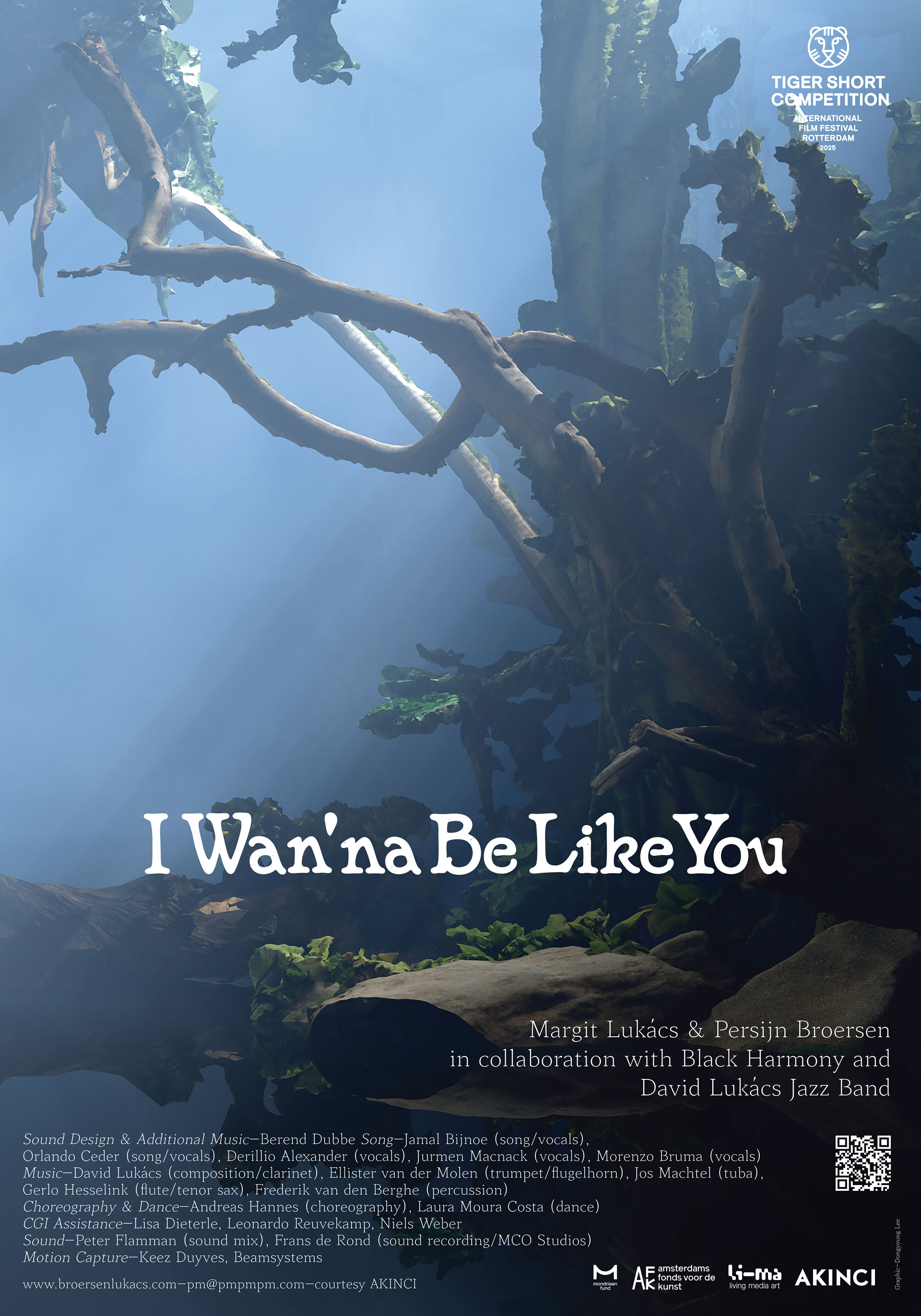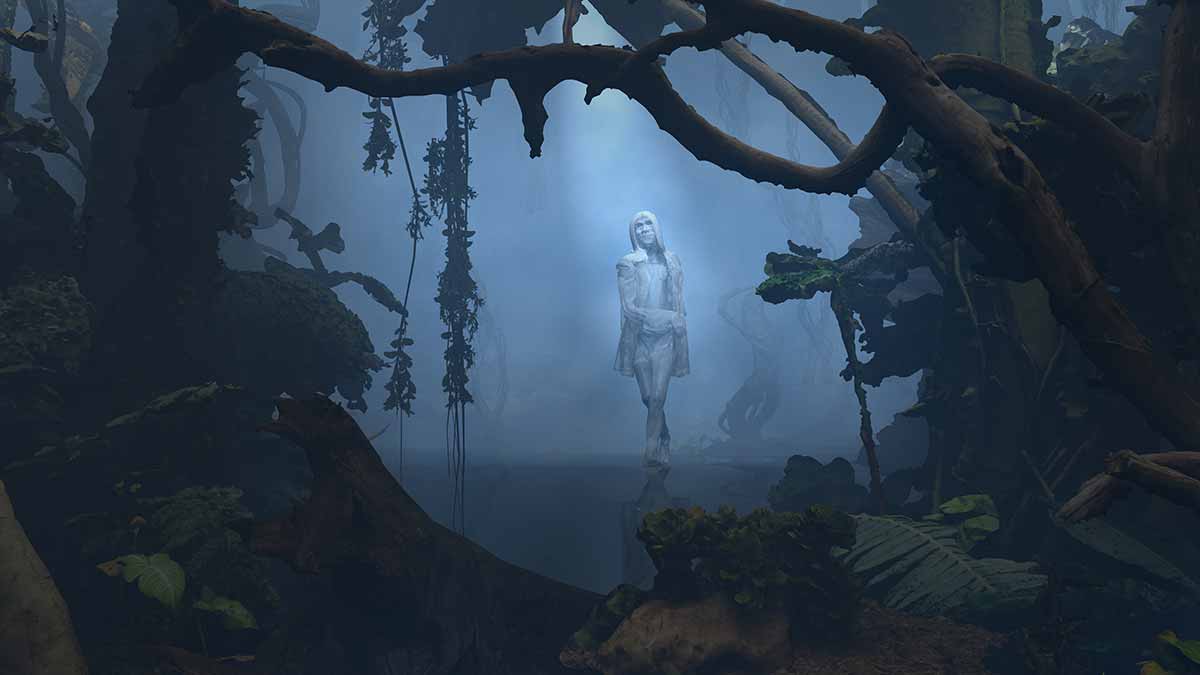
Through a complex process of photogrammetry, 3D modeling, motion capture, and CGI, these gardens were transformed into a single virtual representation of the conquered jungle, as preserved in botanical gardens across Europe. This phantom labyrinth serves as the setting for an avatar of a spirit, an apparition that is neither human nor animal – a hybrid being that floats between past and future.
In a choreography by Andreas Hannes, performed by Laura Moura Costa, the avatar dances to a musical piece composed especially for the film. The piece is based on the song I Wan’na Be Like You from Disney’s The Jungle Book (1967). This song has been interpreted as an homage to the hybrid New Orleans jazz tradition by David Lukács and simultaneously as an indictment of the underlying racism of the original. Musician David Lukács deconstructed I Wan’na Be Like You into a polyphonic melody (a fugue) as a tribute to the classical influences in New Orleans jazz. Jamal Bijnoe and Orlando Ceder, two members of the choir Black Harmony, interpreted and transformed the original song not only as an indictment of colonialism but also as a proud remembrance of the history of their ancestors. With their song Na Mi (Sranang for ‘I am’), they commemorate the dead and celebrate the living.